Natural notes on the gutiar – blank fretboard diagram
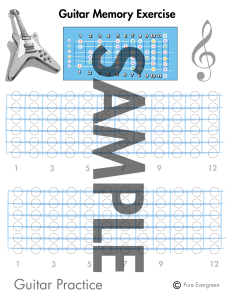
Why Learning the Guitar’s Natural Notes Visually Builds Memory and Unlocks the Fretboard
Learning guitar can feel overwhelming at first. Six strings. Dozens of frets. Hundreds of possible notes. Many players get stuck memorizing shapes and patterns without truly understanding what they’re playing. But there’s a powerful shortcut that experienced musicians often recommend: visually learning the natural notes on the guitar fretboard.
This approach doesn’t just teach notes—it builds memory, confidence, and a mental map that makes every other note easier to understand.
What Are Natural Notes on the Guitar?
Natural notes are the musical notes without sharps or flats:
A, B, C, D, E, F, and G
These notes repeat across the fretboard in predictable ways. When a guitarist learns where these notes live visually—string by string, fret by fret—the instrument stops feeling random and starts to feel organized.
Visual Learning Turns the Fretboard Into a Map
Humans are highly visual learners. When you see patterns instead of isolated facts, your brain builds connections faster.
By visually identifying natural notes on the fretboard:
The guitar becomes a map, not a maze Notes stop feeling abstract You begin to recognize landmarks instead of guessing positions
Instead of thinking, “What shape do I play?” you start thinking, “I know where that note is.”
This mental map allows your hands to move with intention rather than habit.
Why Visual Note Learning Improves Memory
Memory improves when information is structured and meaningful. Visual note learning does exactly that.
Natural notes act as anchor points Repetition across strings reinforces recall Seeing note locations strengthens long-term memory Your brain links sound, position, and name together
Over time, you’re no longer memorizing—you’re recognizing.
This is the same reason musicians who understand the fretboard can jump into new keys, jam with others, or recover quickly from mistakes.
Natural Notes Make All Other Notes Easier to Imagine
Once you know where the natural notes live, sharps and flats become simple.
For example:
If you know where A is, A♯/B♭ is just one fret away If you know C, you automatically know where C♯ is Every sharp or flat becomes a nearby neighbor, not a mystery
Instead of memorizing every single note separately, you’re imagining them in relation to what you already know.
That’s real understanding—not rote memorization.
This Method Breaks Dependence on Shapes Alone
Many guitarists rely heavily on scale boxes and chord shapes. While useful, shapes alone can become limiting.
Visual note learning:
Frees you from staying in one position Helps you connect scales across the neck Improves improvisation and songwriting Makes transposing effortless
You stop being trapped in patterns and start seeing possibilities.
Why This Approach Feels More “Natural”
Learning natural notes mirrors how we learn language:
First, we recognize letters Then words Then meaning
When you learn the fretboard visually, you’re learning the alphabet of music on your instrument. Everything else—scales, chords, modes, solos—builds on top of that foundation.
Final Thoughts: A Smarter Path to Guitar Mastery
Visually learning the guitar’s natural notes isn’t about grinding theory. It’s about clarity.
It builds memory
It creates a mental map
It makes all other notes easier to imagine
And it turns the guitar into an instrument you understand—not just one you play
For beginners and experienced players alike, mastering the natural notes visually is one of the most effective pathways to true fretboard freedom.
 Coffee & a Playlist
Leave a comment