pentatonic scale
The pentatonic scale is arguably the most important scale a guitarist can learn. It’s the backbone of rock, blues, country, and pop, providing a versatile framework for both melodies and solos. While it can be played in any key, understanding it through the lens of natural notes (A, B, C, D, E, F, G) is a fantastic way to grasp its fundamental structure without getting bogged down by sharps and flats initially.
Let’s dive into the two primary pentatonic scales: Minor Pentatonic and Major Pentatonic, focusing exclusively on their natural note forms.
1. The A Minor Pentatonic Scale: The Blues and Rock Powerhouse
When guitarists talk about “the” pentatonic scale, they are usually referring to the minor pentatonic. It has a slightly melancholic, yet powerful sound that is instantly recognizable.
Using only natural notes, the A Minor Pentatonic Scale consists of:
A, C, D, E, G
Let’s break down why these notes work together so well:
- A (Root): Your home base, the note that gives the scale its name.
- C (Minor Third): Gives it that characteristic “minor” sound.
- D (Fourth): A stable, strong interval.
- E (Fifth): Another stable and powerful interval.
- G (Minor Seventh): Adds to the bluesy feel and creates tension that resolves nicely to A.
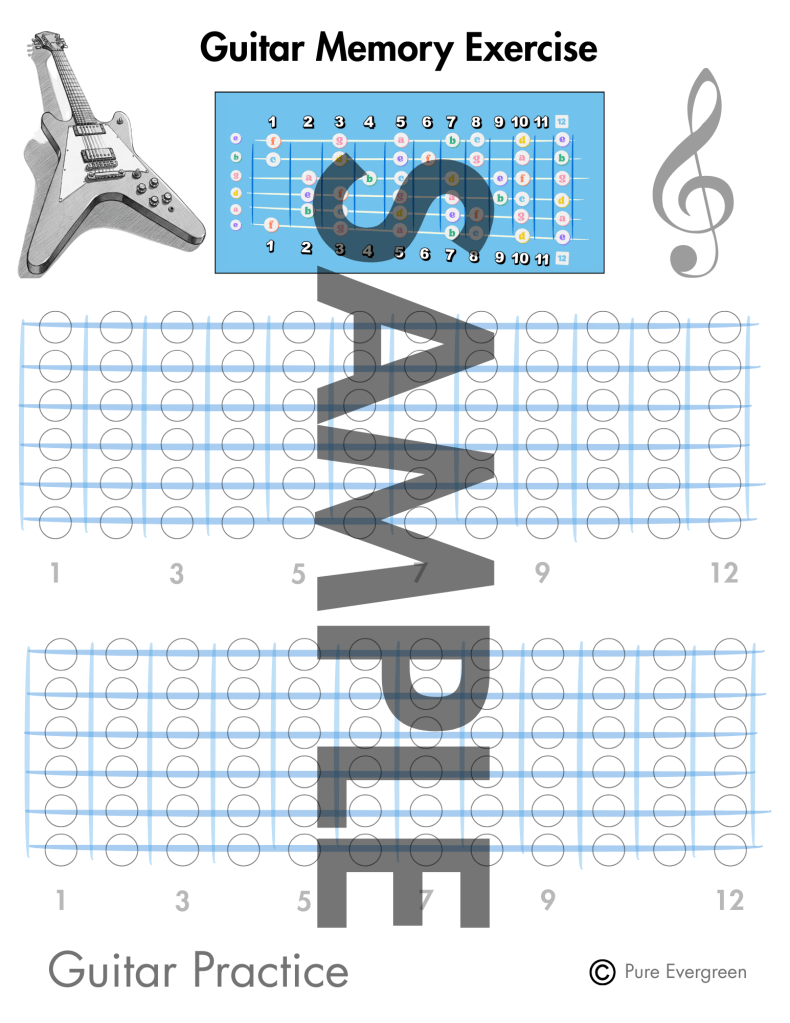
You can easily find these notes across your fretboard. For example, in the most common “Box 1” pattern, starting on the 5th fret of the low E string:
E string: A (5th fret), C (8th fret) A string: D (5th fret), E (7th fret) D string: G (5th fret), A (7th fret) G string: C (5th fret), D (7th fret) B string: E (5th fret), G (8th fret) High E string: A (5th fret), C (8th fret)
This specific pattern allows you to feel the characteristic sound and shape of the minor pentatonic without any sharps or flats to complicate matters. Play through it slowly and listen to how those natural notes create that familiar minor pentatonic sound.
2. The C Major Pentatonic Scale: Bright and Joyful
The major pentatonic scale offers a brighter, more uplifting sound compared to its minor counterpart. It’s fantastic for melodies that feel open, sweet, and often heard in country, folk, and pop music.
Using only natural notes, the C Major Pentatonic Scale consists of:
C, D, E, G, A
Notice something interesting? These are the exact same notes as the A Minor Pentatonic scale! This is no coincidence; A minor is the relative minor of C major. They share the same collection of notes, just with a different “root” or home base.
Here’s a breakdown of its intervals relative to C:
- C (Root): The central note of the scale.
- D (Major Second): A bright, step-up from the root.
- E (Major Third): Gives it that characteristic “major” sound.
- G (Fifth): A strong and harmonious interval.
- A (Major Sixth): Adds to the open, pleasant feel.
To play the C Major Pentatonic using natural notes, you can use a common pattern starting on the 8th fret of the low E string (which is a C note).
E string: C (8th fret), E (12th fret – or use open E, then G on 3rd) A string: G (10th fret), A (12th fret – or use open A, then D on 5th) D string: C (10th fret), D (12th fret – or use open D, then G on 5th) G string: E (9th fret), G (12th fret – or use open G, then B on 4th) B string: C (8th fret), A (10th fret – or use open B, then D on 3rd) High E string: E (open), G (3rd fret)
While the pattern might feel a little less symmetrical if you’re trying to integrate open strings, focusing on the notes themselves reveals the beauty of this natural-note major pentatonic.
Why Practice with Natural Notes?
- Simplicity: It removes the complexity of accidentals (sharps and flats), allowing you to focus purely on the relationships between the five notes.
- Foundation: Once you understand these natural note forms, transposing them to other keys by simply sliding the entire pattern up or down the fretboard becomes much more intuitive.
- Relative Relationship: It highlights the powerful relationship between relative major and minor scales, showing how the same set of natural notes can create vastly different musical moods just by changing your root note.
So grab your guitar and explore the A Minor Pentatonic and C Major Pentatonic using only the natural notes. You’ll quickly discover the profound simplicity and immense musical power hidden within these five essential tones. Happy shredding!
 Coffee & a Playlist
Leave a comment