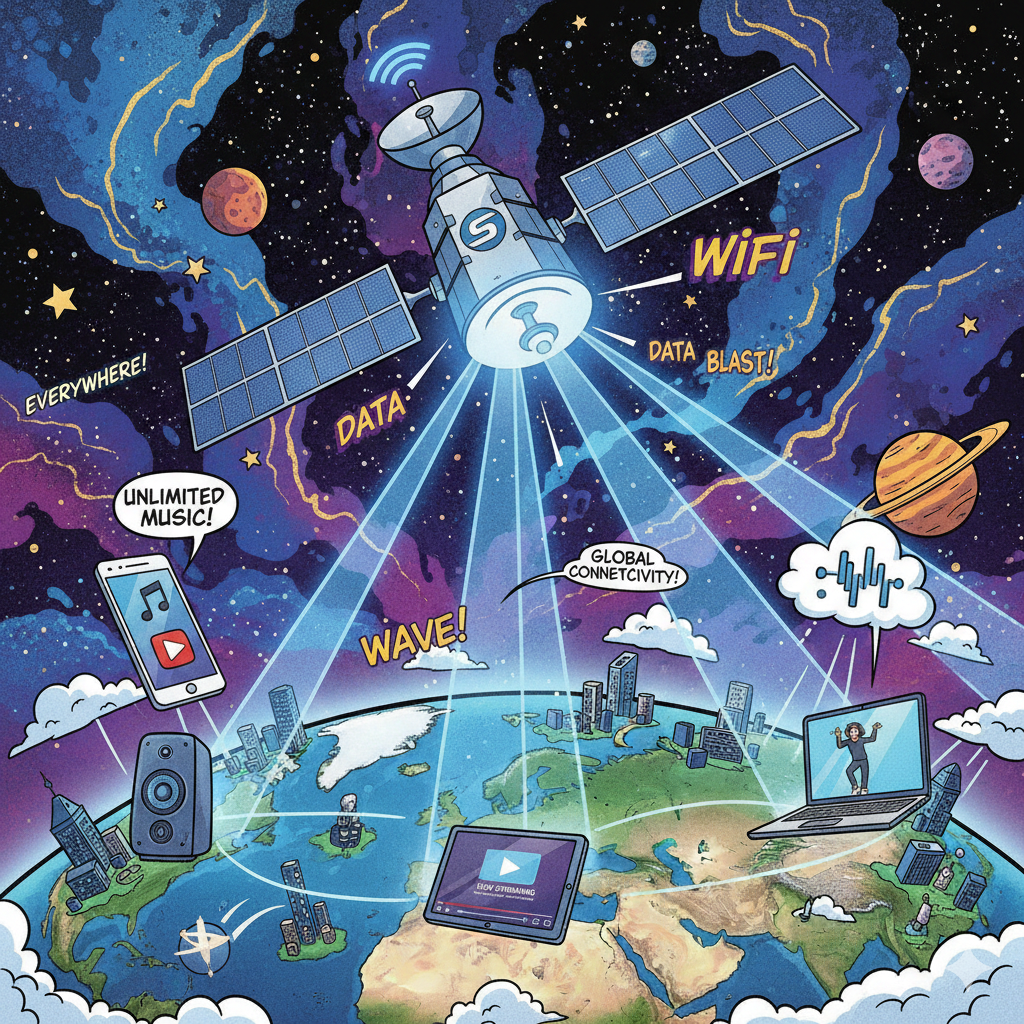
High-speed internet doesn’t always come from underground cables or cell towers. In many parts of the world, internet access arrives from space. Satellite internet technology allows data to be transmitted from orbit to Earth, connecting remote areas, ships at sea, airplanes, and underserved regions where traditional infrastructure isn’t practical.
So how does satellite internet actually work? Let’s break it down in simple terms.
What Is Satellite Internet?
Satellite internet is a wireless communication system that uses satellites orbiting the Earth to transmit data between users and the global internet. Instead of relying on fiber-optic cables or cellular networks, satellite internet beams signals through space using radio waves.
This technology makes it possible to deliver internet access almost anywhere on the planet.
The Basic Components of Satellite Internet
Satellite internet relies on three main components:
User Equipment This includes a satellite dish or antenna at your home, business, plane, or ship. The dish sends and receives data signals to and from space. Orbiting Satellites Satellites act as relay stations in orbit. They receive signals from Earth, amplify them, and beam them back down to another location. Ground Stations (Gateways) Ground stations connect the satellite network to the global internet infrastructure. These stations route data to websites, cloud services, and servers around the world.
How Data Travels From Space to Your Screen
Here’s what happens when you load a webpage using satellite internet:
You click a link or type a web address. Your device sends data to your satellite dish. The dish beams the signal up to a satellite orbiting Earth. The satellite relays the signal to a ground station connected to the internet. The requested data travels back the same way from ground station to satellite, then down to your dish, and finally to your device.
All of this happens in fractions of a second.
Types of Satellite Orbits and Why They Matter
Not all satellites orbit the Earth at the same distance. The orbit affects speed, latency, and performance.
Geostationary Orbit (GEO)
Located about 22,000 miles above Earth Covers large areas with fewer satellites Higher latency due to long signal travel distance
Low Earth Orbit (LEO)
Located a few hundred miles above Earth Uses large constellations of satellites Lower latency and faster speeds
Modern satellite internet providers increasingly use LEO satellites to deliver performance closer to fiber or cable internet.
How Satellites Beam Internet Signals
Satellites use radio frequencies to transmit data. These signals are carefully directed using advanced antennas and beamforming technology, which focuses signals where they’re needed most.
This allows satellites to:
Serve multiple users simultaneously Adjust coverage dynamically Maintain reliable connections even as satellites move
Advantages of Satellite Internet
Satellite internet offers several key benefits:
Coverage in remote and rural areas Rapid deployment without ground infrastructure Connectivity for mobile platforms like aircraft and ships Support during disasters when terrestrial networks fail
Challenges and Limitations
Despite its advantages, satellite internet also faces challenges:
Weather can affect signal strength Equipment costs can be higher Network congestion in high-demand areas Line-of-sight requirements for dishes
Ongoing advancements continue to reduce these limitations.
The Future of Satellite Internet
The future of satellite internet is rapidly evolving. Large satellite constellations, improved launch technology, and smarter signal management are making space-based internet faster, more affordable, and more accessible.
As technology advances, satellite internet will play a major role in closing the digital divide and connecting the world no matter how remote the location.
Final Thoughts
Satellites beaming internet to Earth may sound futuristic, but it’s already a reality. By sending data through space and back in milliseconds, satellite internet is transforming how people connect, learn, work, and communicate across the globe.
From rural homes to airplanes in flight, the internet is no longer limited by wires, it’s coming from above.
 Coffee & a Playlist
Leave a comment