Chord progressions for guitar
Whether you’re just starting your guitar journey or you’ve been strumming for years, understanding chord progressions is like unlocking a secret language. These sequences of chords form the backbone of countless songs across every genre, providing emotional depth and a sense of direction. Knowing them doesn’t just help you play existing songs; it empowers you to write your own!
Let’s dive into five popular chord progressions that every guitarist should have in their toolkit, and why they’re so crucial.
1. The I-IV-V-I Progression (The Blues/Rock Foundation)
Example Key: G-C-D-G
This is arguably the most fundamental progression in Western music. It’s the cornerstone of blues, rock and roll, country, and folk. The “I” (tonic) chord establishes the home key, the “IV” (subdominant) creates a sense of movement away from home, and the “V” (dominant) builds tension, practically demanding a return to the “I”.
Why it matters: It’s simple, powerful, and instantly recognizable. Master this, and you’ve got the framework for thousands of songs, from classic rock anthems to campfire singalongs. It teaches you how tension and release work in music.
2. The I-V-vi-IV Progression (The “Pop” Progression)
Example Key: C-G-Am-F
If you’ve listened to the radio in the last few decades, you’ve heard this progression countless times. It’s so ubiquitous it’s often jokingly referred to as “the pop punk progression” or “the four chords that made a million songs.” Think “Don’t Stop Believin’” by Journey, “With or Without You” by U2, or even recent pop hits.
Why it matters: This progression is incredibly versatile and evokes a strong sense of sentimentality, longing, or triumph. It demonstrates how a slightly melancholic minor chord (vi) can add a different flavor while still feeling “right” in a major key. It’s a goldmine for songwriting!
3. The ii-V-I Progression (Jazz’s Favorite Friend)
Example Key: Dm-G7-C (in the key of C Major)
Stepping into jazz and more sophisticated harmony, the ii-V-I is king. Here, the “ii” (supertonic minor) chord sets up the “V7” (dominant seventh), which then resolves perfectly to the “I”. The seventh chord on the V adds a jazzy, sophisticated tension that feels incredibly satisfying when it resolves.
Why it matters: This progression teaches you about functional harmony and voice leading in a more advanced way. It’s the building block for jazz standards and helps train your ear to hear more complex chord movements. If you want to improvise or play jazz, this is essential.
4. The I-vi-IV-V Progression (The Doo-Wop/Rhythm & Blues Progression)
Example Key: C-Am-F-G
Similar to the pop progression but with a slightly different order, this progression has a classic, almost nostalgic feel. It’s the sound of 1950s doo-wop, early R&B, and countless ballads. The movement from the I to the relative minor (vi) and then through the IV and V creates a circular, romantic feel.
Why it matters: This progression highlights how simply changing the order of chords can dramatically alter the feel and genre association of a progression. It’s great for ballads, soulful tunes, and understanding how chords can “turn around” to create a loop.
5. The Andalusian Cadence (The Flamenco/Minor Sound)
Example Key: Am-G-F-E (i-VII-VI-V in A minor)
Originating in Spanish music, particularly flamenco, this progression has a distinct, dramatic, and often melancholic flavor. It’s a descending bass line that creates a powerful sense of movement and tension, especially with the resolving E major chord (the V) in a minor key.
Why it matters: This progression introduces you to the power of minor keys and modal interchange. It’s fantastic for adding drama, passion, and a touch of world music flair to your playing. It teaches you about half-step resolutions and strong dominant pull.
Why These Progressions Matter Beyond Just Playing Songs
Understanding these progressions is about more than just memorizing shapes. It’s about:
- Ear Training: You’ll start to recognize these patterns in any song you hear, helping you learn by ear.
- Songwriting: These are templates! You can take these structures and build your own melodies and lyrics on top.
- Improvisation: Knowing the underlying progression allows you to choose scales and arpeggios that fit the chords, making your solos sound musical.
- Communication: When you can discuss music in terms of I-IV-V, you’re speaking a universal language with other musicians.
So grab your guitar, experiment with these progressions in different keys, and listen for them in your favorite songs.
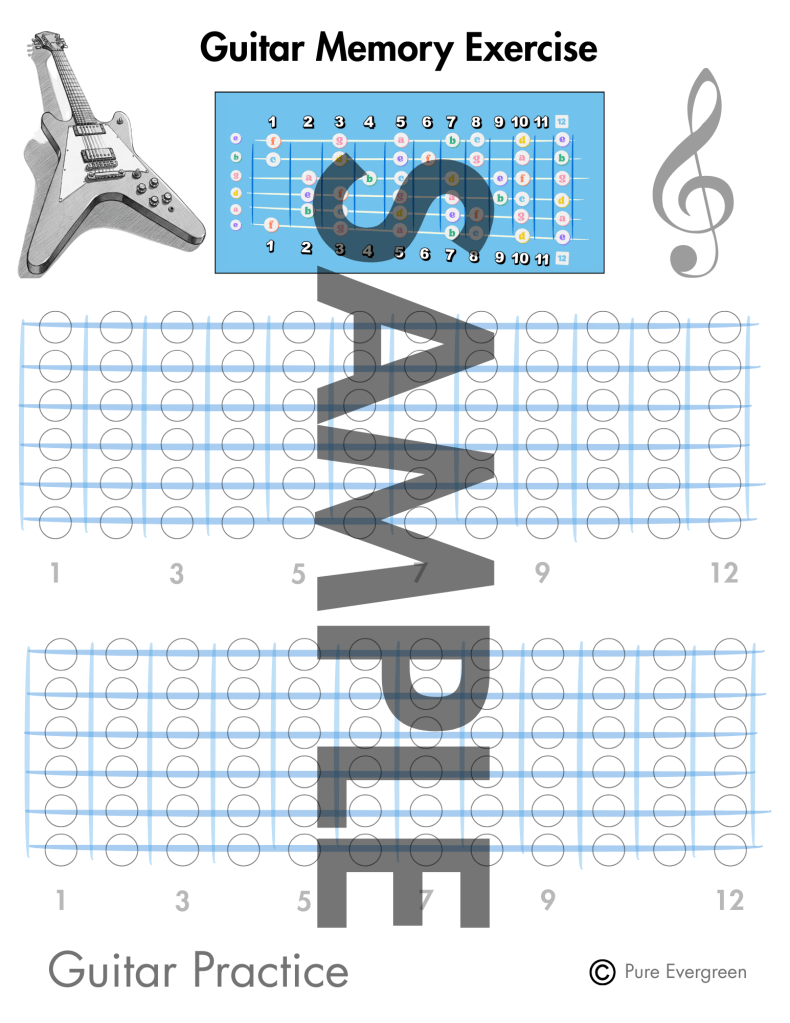
Learn the notes on guitar easily with the new guitar fretboard diagram!
 Coffee & a Playlist
Leave a comment