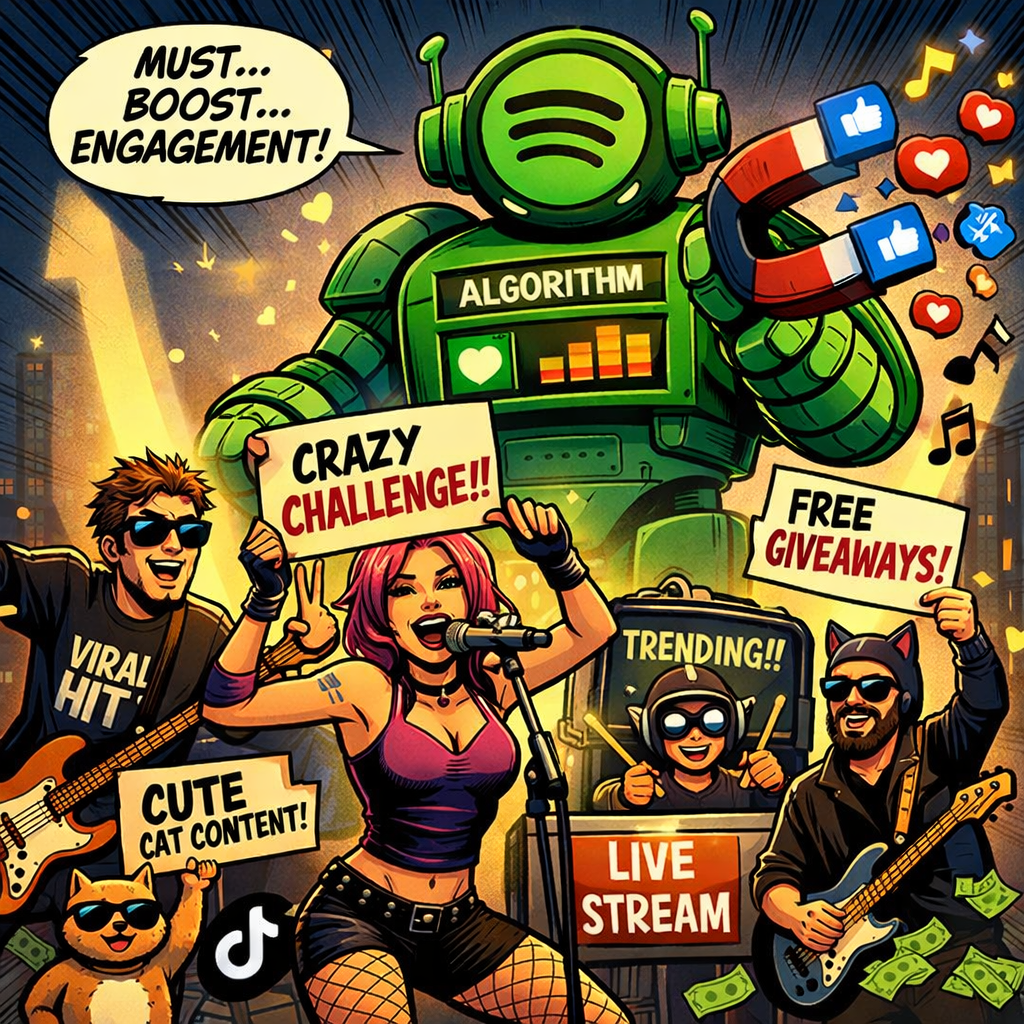
Getting Noticed by the Spotify algorithm
If you had asked me in the early days of Spotify what it took to grow, I would have said luck. Get on a playlist, hope something catches, maybe get discovered. But after years of releasing music independently, watching songs sit unnoticed, and then slowly seeing traction build, I realized something important:
The Spotify algorithm doesn’t reward viral moments. It rewards consistent signals of real listener interest.
Most independent artists are chasing spikes. The algorithm is looking for patterns.
This article focuses on the things that actually move the needle long-term, not hacks, not gimmicks, not “post 5 TikToks a day” advice, but real signals that tell Spotify your music deserves to be shown to more people.
First, Understand What Spotify Actually Wants
Spotify has one main goal:
Keep listeners on the platform.
That means Spotify promotes music that:
• Gets played all the way through
• Gets saved
• Gets replayed
• Gets added to playlists
• Keeps listeners listening
Not just clicked.
Streams alone don’t impress the algorithm. Behavior does.
A song with 500 engaged listeners can outperform a song with 5,000 passive listeners.
This changes everything about how you should promote your music.
The Biggest Mistake Independent Artists Make
Bad promotion:
“Check out my new song!”
Better promotion:
“If you like atmospheric indie rock like early 2000s alternative, you might like this.”
The algorithm learns from listener behavior. If random people click and leave, it hurts you.
If the right people stay, you grow.
Quality listeners beat quantity listeners.
How the Algorithm Actually Tests Your Music
Spotify quietly tests songs in small batches.
Typically:
- Your followers hear it
- Then small algorithm tests happen
- Then Release Radar
- Then Discover Weekly potential
- Then Radio expansion
But only if signals are strong.
What helps trigger expansion:
• Save rate
• Completion rate
• Repeat listens
• Playlist adds
• Profile visits after listening
What hurts:
• Skips in first 30 seconds
• One-time listeners
• Empty traffic from bad ads
• Wrong audience targeting
10 Actionable Spotify Growth Strategies That Actually Work
1 Release music consistently (but not constantly)
The algorithm rewards active artists.
A good pace:
Every 6–10 weeks.
Why?
Each release resets discovery chances.
2 Focus on saves more than streams
A save tells Spotify:
This matters to someone.
Ways to increase saves:
• Ask listeners directly
• Say “If you like it, consider saving”
• Pin comments mentioning saves
• Put reminder in description
3 Train your first 100 listeners
Your early listeners shape your algorithm path.
Think of them as your test audience.
Send music to:
• Fans of your genre
• Other indie musicians
• Small communities
• Niche forums
Avoid:
Mass promotion pages
Follow-for-follow groups
Random traffic
4 Spotify listener retention tips for musicians
Spotify watches:
Do people finish the song?
Strategies:
• Strong first 20 seconds
• No long intros
• Early emotional hook
• Clear sonic identity
This doesn’t mean copying trends.
It means respecting attention.
5 Build a catalog instead of chasing one hit
Independent artists often think:
“I just need one song to work.”
Reality:
Catalog growth beats single hits.
Why?
More songs =
More entry points =
More algorithm testing =
More listener pathways.
Artists with 20 songs have massive advantage over artists with 3.
6 Your Spotify profile matters more than you think
Spotify tracks:
• Profile clicks
• Follows
• Catalog exploration
Make sure you have:
• Artist bio
• Canvas visuals
• Artist pick
• Playlists featuring your music
7 External traffic works best when it converts
Spotify doesn’t just track where listeners come from.
It tracks what they do after arriving.
Good traffic:
Fans of similar artists
Your email list
Your social followers
Music communities
Weak traffic:
Cheap ads
Bot playlists
Random promotion services
best external traffic sources for Spotify music promotion
8 Playlist strategy most artists miss
Most musicians chase big playlists.
Smart musicians build small playlist networks.
Example:
Find playlists with:
500–5,000 followers.
Why?
They often have:
Better engagement
Real listeners
Less competition
20 small playlists often outperform one big one.
9 Momentum matters more than spikes
Spotify reacts to growth patterns.
Slow growth:
50 → 70 → 120 → 200 listeners
Looks better than:
0 → 2000 → 10
The second looks artificial.
You want steady growth curves.
how to build Spotify streaming momentum
10 Think in years not weeks
This is the hardest truth.
Most artists quit before the algorithm even understands them.
Spotify growth timeline often looks like:
Year 1 = invisible
Year 2 = small signals
Year 3 = algorithm starts recognizing patterns
Year 4 = compound growth
The artists who win simply stay.
long term Spotify growth strategy independent musicians
Uncommon Insights Most Artists Don’t Talk About
The algorithm remembers you
Spotify tracks artist history.
Consistency builds trust.
Disappearing for years resets momentum.
Imperfect music can outperform perfect music
Listeners respond to:
Emotion
Identity
Authenticity
Not perfection.
Songs that feel human often outperform technically perfect songs.
Your genre positioning matters more than originality
If Spotify can’t categorize you, it can’t recommend you.
You need:
Clear lane
Clear similar artists
Clear audience
You can be unique within a lane.
Not outside all lanes.
Listener identity matters more than demographics
Spotify doesn’t think:
“35 year old male.”
It thinks:
“Person who listens to melancholic indie rock at night.”
Behavior beats demographics.
A Long-Term Promotion Mindset That Works
Instead of asking:
“How do I promote this song?”
Ask:
“How do I build an artist that algorithms trust?”
That means:
Release consistency
Listener trust
Sound identity
Audience clarity
Patience
Spotify is less like social media.
More like planting trees.
Nothing happens.
Then roots form.
Then growth becomes easier.
Realistic Expectations Independent Artists Should Have
Healthy early milestones:
100 monthly listeners = working foundation
500 = real signals forming
1,000 = algorithm awareness
5,000 = discovery potential
10,000 = momentum phase
This is slower than viral fantasy.
But much more stable.
The Truth Nobody Likes Hearing
The artists who succeed usually did this:
They didn’t quit.
They improved slowly.
Released consistently.
Found their audience.
Ignored shortcuts.
The algorithm eventually notices persistence.
Final Advice From Someone Playing the Long Game
If I could tell any independent artist one thing it would be:
Stop trying to beat the algorithm and start trying to understand listeners.
Because when listeners respond:
The algorithm follows.
Not the other way around.
Make music people replay.
Make music people save.
Make music people come back to.
Do that long enough and Spotify eventually does what every independent artist hopes for:
It starts bringing listeners to you.
 Coffee & a Playlist
Leave a comment