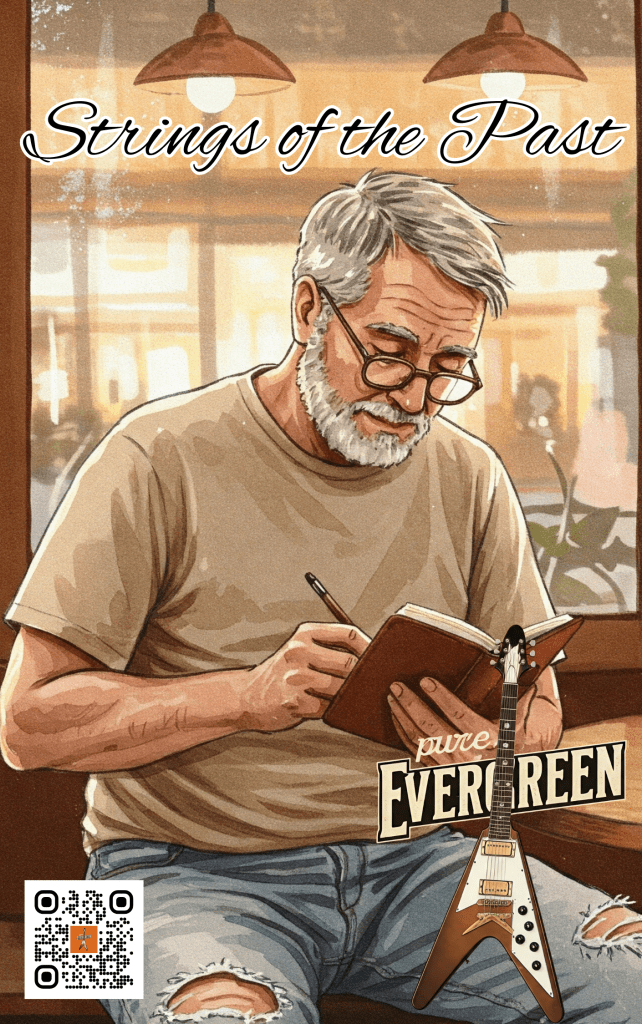
Chapter 1: The Lights of Winter
The town lay hushed beneath a heavy blanket of snow, each pristine drift sculpted by the gentle whisper of the wind. It was the kind of snowfall that transformed the ordinary into the magical, draping rooftops and bare branches like powdered sugar on a meticulously crafted gingerbread village. The streetlamps, usually stark and functional, were now festooned with a riot of colorful Christmas lights – ruby red, emerald green, sapphire blue – their warm glow seeping through the frosted air and reflecting in shimmering pools on the icy sidewalks.
From the nearby Harmony Creek Park, a chorus of children’s laughter, sharp and bright against the winter stillness, punctuated the air. Their sled tracks, etched deep into the snow-covered slopes, crisscrossed like a flurry of joyful signatures on a silent, winter contract. The very air seemed to hum with the season, carrying the comforting scent of pine needles shed from unseen Christmas trees and the sweet, spicy warmth of cinnamon from a nearby bakery. Occasionally, a faint, almost ethereal jingle of distant bells drifted through the crisp December air, a fleeting promise of the holidays to come.
Nestled snugly between the comforting solidity of Oakhaven Books and the vibrant, fragrant haven of Bloom & Stem Florist, sat “The Daily Grind,” a small café that had become Marshall Smith’s sanctuary. The moment he stepped inside, the biting cold surrendered to a wave of warmth and the rich, comforting aroma of freshly roasted espresso beans mingling with the buttery sweetness of morning pastries. He gravitated, as always, to his corner booth – a worn leather banquette that cradled him like an old friend.
Marshall, a man etched with the quiet stories of sixty-five winters, settled into his familiar spot. His silver-streaked hair, once a neat, dark comb-over, now possessed a certain untamed quality, reflecting the shift in his life’s rhythm. He wore a thick, hand-knitted wool sweater, the yarn slightly scratchy against his skin, and a pair of well-worn fingerless gloves that allowed his aged fingers to still tap at the keys. His posture, a slight rounding of the shoulders, spoke of decades spent hunched over ledgers and tax returns, a life meticulously balanced in columns and figures.
But that life was a chapter closed. Now, retirement had gifted him a restless energy, a yearning to give voice to the stories that had long simmered beneath the surface of his precise, analytical mind. Writing had become his unexpected anchor, a slow and sometimes frustrating process, yet one that offered a profound sense of purpose. He liked The Daily Grind not just for its reliably strong coffee, but for the gentle hum of its shared humanity. The low murmur of conversations – snippets of local gossip, hurried business calls, quiet confessions – the smooth, melancholic notes of jazz that always seemed to play at just the right volume, the occasional burst of laughter from young Clara behind the barista station as she bantered with a regular – it was all a soft, constant reminder that even in his solitary pursuit, he wasn’t truly alone.
Steam curled from his chipped ceramic coffee mug, a fragrant cloud that momentarily fogged the lower lenses of his wire-rimmed glasses. He absently pushed them up his nose, his gaze returning to the glowing screen of his laptop, a faithful but increasingly temperamental companion that bore the scars of countless edits and late-night writing sessions. The winter lights outside, those cheerful beacons against the encroaching dusk, blurred slightly as his eyes, a little tired but still sharp with observation, stared at the digital page.
He was wrestling with a new story. Or, more accurately, coaxing it into being. The words didn’t flow with the youthful exuberance he sometimes imagined other writers possessed. They came slowly, deliberately, like the measured footsteps of someone traversing a snowy path. But when they did arrive, they felt authentic, unearthed from a deep well of lived experience. He wasn’t interested in fleeting trends or crafting sensational narratives. He was chasing something more profound, something akin to the quiet, enduring truth that lay beneath the glittering surface of a winter landscape. A truth he hoped, in his own small way, to illuminate. He took a slow sip of his coffee, the warmth spreading through him, a small comfort against the chill that still lingered from the outside, and turned his attention back to the blinking cursor, a tiny beacon in his digital world.
Chapter 2: A Call from the Past
The insistent buzz of his cell phone shattered the quiet rhythm of the café, a jarring intrusion into Marshall’s contemplative solitude. He jumped slightly, the sudden vibration beneath his fingertips sending a ripple through the familiar ache in his arthritic knuckles. An unknown number flashed across the screen.
He hesitated, the phone heavy in his hand, a tangible manifestation of the unexpected. The thought of answering, of engaging with the unknown, felt like a small act of defiance against the comfortable predictability of his routine. Finally, with a sigh that carried a hint of resignation, he pressed the green button. “Hello?” His voice, roughened by years of quiet conversation and solitary reflection, held a cautious edge.
“Do you have a publisher for your book?” The voice on the other end was sharp, efficient, and unmistakably businesslike, cutting through the ambient noise of the café like a knife through butter. It was a voice accustomed to getting straight to the point, to dealing in contracts and deadlines, a far cry from the gentle murmur of the café’s atmosphere.
Marshall frowned, a deep crease forming between his eyebrows. “Which book?” he asked, the question laced with a mixture of confusion and a faint, almost imperceptible tremor of anticipation. The possibilities, however remote, flickered in his mind.
“The one that’s gone viral on TikTok. Strings of the Past.”
He sat back abruptly against the worn leather of the booth, the phone slipping slightly in his suddenly damp hand. His heart, usually a steady, reliable companion, began to thud against his ribs with an insistent, almost frantic rhythm. The title hung in the air, each syllable a ghostly echo from a forgotten chapter of his life. He hadn’t heard anyone utter those words aloud in years, hadn’t dared to even whisper them to himself in the privacy of his apartment.
Strings of the Past. It was a name that carried the weight of shattered dreams and unfulfilled ambitions. He’d self-published it in his forties, during a brief, audacious period when he’d dared to believe in the possibility of a second act. He’d poured his heart, his soul, and a significant portion of his hard-earned savings into that book, convinced that its story, a poignant tale of love and loss across generations, would resonate with readers. He remembered the sting of rejection, the endless hours spent at sparsely attended book fairs, the optimistic purchase of advertisements that vanished into the digital ether, the meticulously crafted press releases sent to influencers who never even acknowledged their receipt.
It flopped. Not just mildly. Spectacularly. The memory of that failure, the crushing weight of dashed hopes, had left an invisible scar on his spirit, a wound that had slowly healed over the years, leaving behind a dull ache of regret.
Now, this stranger, this voice from the impersonal world of business, was telling him it was a hit? Marshall nearly choked on a bitter laugh that threatened to rise in his throat. “That old thing?” he managed to say, his voice thick with disbelief and a hint of self-deprecating irony.
“You should check your email,” the voice said, the tone still clipped and professional. “The world has rediscovered you.” And then, without another word, the line went dead.
He stared at the phone, the screen now displaying the call’s duration, a mere two minutes that had somehow upended his entire reality. With trembling fingers, he finally ended the call and, his mind reeling, opened his laptop. He clicked on his email icon, his heart pounding in his chest like a trapped bird.
Hundreds of messages flooded his inbox. A chaotic jumble of subject lines: “OMG Strings of the Past!!”, “I cried so much!”, “This book changed my life,” “Fan art for Elias and Clara!” He scrolled through them, his eyes widening in disbelief. Comments. Fan art – intricate drawings and paintings of his characters. Review videos – teenagers, their faces streaked with tears, passionately discussing the book’s themes. TikTok videos, set to trending music, showcasing his characters and plot points. A wave of attention, a tidal wave of adoration, crashing onto the shores of his forgotten work, twenty years late.
He stared at the screen, utterly stunned, his mind struggling to reconcile the reality of what he was seeing with the years of quiet disappointment. The manuscript he’d nearly deleted in a fit of despair, the story he’d relegated to the dusty corners of his memory, was breathing again. Alive. And somehow, inexplicably, it was thriving.
Chapter 3: Overnight Fame
The world tilted on its axis, the familiar landscape of Marshall’s quiet life dissolving into a surreal, almost dreamlike vista. It wasn’t a gradual shift; it was a sudden, seismic jolt. Everything changed. Overnight. The phrase echoed in his mind, a constant, slightly disbelieving refrain.
The phone, once a seldom-used instrument of mundane communication, became a relentless conduit of opportunity. Agents called, their voices smooth and persuasive, brimming with an enthusiasm that felt both genuine and calculated. Publishers, the very same gatekeepers he had once humbly, almost desperately, begged to grant his manuscript a fleeting glance, were now engaged in a fervent bidding war for the rights to Strings of the Past. It was a dizzying spectacle, a whirlwind of contracts and clauses that his former accountant self would have meticulously dissected, but which now felt strangely detached from the core of his being. And then came the call from a streaming platform, their interest piqued by the fervent online buzz, wanting to explore the possibility of adapting his long-forgotten story for a new generation of viewers. Everyone, it seemed, wanted a piece of the “forgotten masterpiece,” a label that still felt profoundly alien on his tongue. The irony, sharp and bittersweet, wasn’t lost on him. It was a cosmic joke, a delayed punchline delivered two decades after the setup.
He watched, with a detached sense of wonder, as Strings of the Past ascended the bestseller lists, climbing with a momentum that defied the years of its obscurity. His face, etched with the lines of time and quiet contemplation, began to appear in online articles and even a few print publications. Headlines screamed his improbable story: “The Author Who Waited,” “Grandfather of TikTok Lit,” “From Obscurity to Overnight Sensation.” He saw his book cover juxtaposed with images of tearful teenagers holding their copies, their faces illuminated by the glow of their phone screens – a world he was only just beginning to understand.
Through it all, a surprising core of calm resided within Marshall. He still found himself drawn to the comforting familiarity of The Daily Grind each morning. The ritual of his strong black coffee and the quiet hum of the café remained a steadfast anchor in the swirling chaos of his newfound fame. The only concession he made was the addition of noise-canceling headphones, a discreet shield against the curious glances and hushed whispers of the local students, some of whom he’d overheard excitedly discussing the “old guy who wrote that sad book on TikTok.” He clung to a sense of normalcy, a quiet defiance against the sudden spotlight. For him, writing had never been about the applause, the accolades, or the potential for wealth. It was a deeply personal act, a quiet conversation with the voices in his head, a way to give shape to the emotions and experiences that had accumulated over a lifetime. It was about finding his voice, and after years of silence, he finally had it, amplified in a way he could never have imagined.
What undeniably changed was the money. Substantial royalty checks arrived with reassuring regularity, followed by licensing offers for merchandise he couldn’t quite fathom – Strings of the Past-themed candles and quote-emblazoned tote bags. Invitations to literary festivals in far-flung cities landed in his inbox alongside requests for podcast interviews from hosts with enthusiastic voices he’d never heard before. It was enough, and then some. Enough to finally pay off the mortgage on the small house he’d diligently maintained for decades, a weight lifted from his shoulders he hadn’t realized he’d been carrying so heavily. Enough to send his niece, Sarah, a bright and ambitious young woman, to the out-of-state college she’d dreamed of attending, a quiet act of generosity that brought him a deep sense of satisfaction. And yes, enough to finally indulge in the sleek, ridiculously expensive espresso machine he’d always coveted but deemed an unnecessary extravagance. He even learned to use it, the hiss and whir a new, somewhat luxurious sound in his quiet kitchen.
Yet, beneath the surface of this newfound prosperity and recognition, a subtle unease began to stir within him. It was a faint disquiet, like a persistent hum just below the threshold of conscious awareness. He couldn’t quite articulate it, this nagging feeling that shadowed the bright lights of his overnight fame. Was it the speed of it all? The feeling of being swept away by a current he didn’t fully understand? Or was it something else, a deeper, more fundamental concern about the nature of this sudden adoration and what it truly meant? He sipped his meticulously brewed espresso, the rich aroma doing little to dispel the growing sense of something amiss, a faint shadow lurking behind the dazzling lights of his unexpected success.
Chapter 4: The Coffee Shop Incident
The biting wind that whipped through the streets of Waterford clung to Marshall’s coat as he hurried back to The Daily Grind. The crisp air, usually invigorating, felt sharp against his skin today, a stark contrast to the warm, burgeoning excitement that hummed within him. A new idea, vibrant and insistent, had taken root in his mind during his morning walk, a compelling narrative thread he was eager to explore. He pictured the scene unfolding in his mind’s eye, the dialogue already forming, and a familiar thrill, the quiet joy of creation, bubbled beneath his calm exterior.
He ordered his usual – a double espresso, the rich, dark brew a necessary fuel for his writing, and a flaky almond croissant, a small indulgence he now allowed himself more freely. Settling into his beloved corner booth, the familiar scent of roasted beans and sweet pastry enveloped him like a comforting embrace. He savored the first sip of his espresso, the bitter warmth spreading through him, grounding him in the present moment before he plunged back into the world of his imagination.
He had barely opened his laptop, the familiar glow of the screen a welcoming beacon, and begun to translate the swirling ideas in his head into tangible words, when the café door BANGED open with a sudden, violent force. The cheerful chatter within the cozy space fractured, replaced by a collective gasp. A young man, barely out of his teens, maybe twenty at most, burst through the entrance. His hoodie was pulled up, obscuring his features, and his eyes darted nervously around the room, like a trapped animal seeking an escape route. There was a frantic energy about his movements, a raw desperation that sent a primal shiver of unease down Marshall’s spine. Something about the tautness of his shoulders, the hurried, almost panicked way he scanned the faces, set off a silent alarm within Marshall, a long-dormant instinct for danger flickering to life.
Before Marshall could fully register the intrusion, before his mind could even form a coherent thought beyond the unsettling presence, the young man barreled straight towards his table. It wasn’t an accidental bump; it was a deliberate, forceful collision. Coffee, dark and scalding, erupted from his mug, splashing across the table, his sweater, and the polished wooden floor. His laptop, his faithful companion in this new chapter of his life, skidded precariously across the smooth surface, threatening to tumble to the ground.
A moment of stunned disbelief held Marshall captive. Then, with a speed that belied his agitated state, the young man’s hand shot out. In a swift, almost practiced motion, he snatched the laptop and Marshall’s worn leather wallet from the table, his fingers brushing against Marshall’s own in the process. He turned on his heel and bolted back towards the door, a blur of dark fabric and panicked energy.
“Stop him!” someone – he thought it was Clara, her voice sharp with alarm – yelled across the suddenly silent café. But the young man was already gone, disappearing into the cold afternoon with his ill-gotten gains.
The café descended into a chaotic flurry of concerned murmurs and rising panic. A few of the braver patrons started to move towards the door, but it was clear the thief had vanished. Marshall stood up slowly, his limbs feeling heavy and disconnected, a cold dread washing over him. The spilled coffee dripped from his sweater, a sticky reminder of the sudden violation. Clara, her face pale with shock, was already on the phone, her voice trembling as she reported the incident to the police. A kind older woman, her eyes filled with sympathy, rushed over with a handful of paper napkins and a glass of water, her touch surprisingly gentle on his arm.
But amidst the spilled coffee, the concerned faces, and the rising tension in the air, only one thought hammered relentlessly in Marshall’s mind, a cold fist clenching around his heart. The file on that laptop. His new manuscript. Weeks of work, ideas painstakingly crafted, characters slowly coming to life on the digital page. Half-finished. And not backed up. The realization hit him with the force of a physical blow, eclipsing the shock of the theft itself. The money in his wallet was replaceable, the laptop was insured, but the nascent world he had been building, the fragile spark of his new story – that felt irreplaceable, utterly and irrevocably lost. A wave of despair, sharp and suffocating, washed over him, leaving him feeling more vulnerable and exposed than he had in years.
Chapter 5: Chasing Shadows
The uniformed officers who responded to Clara’s frantic call were polite, their expressions a practiced blend of concern and weary routine. They dusted for fingerprints on the sticky tabletop, their movements methodical, almost detached. Marshall answered their questions in a daze, the details of the young man’s fleeting presence already blurring in his memory. He filled out the necessary forms, the stark white paper feeling flimsy and inadequate to capture the violation he felt. He meticulously listed the stolen items – the aging laptop, the worn leather wallet containing a surprisingly modest amount of cash, the credit cards he immediately cancelled. He provided a vague description of the thief – young, thin, hoodie up – a portrait so generic it felt utterly useless. He waited for the promised follow-up calls, each unanswered ring of his own phone a small confirmation of his powerlessness. The system, he realized with a weary sigh, moved at its own pace, often leaving the victim stranded in the aftermath.
So, in a move that surprised even himself, Marshall decided to take matters into his own hands. He remembered a hushed conversation he’d overheard at the café weeks ago, two older gentlemen discussing local figures. One name had stuck with him: Lena Grady. An ex-cop, they’d said, with a reputation for getting results where the official channels often stalled. Discreet. Effective. Someone who understood the undercurrents of the town. He’d spent a nervous afternoon tracking her down, a few hesitant phone calls leading him to a small, unassuming office above a dusty antique shop.
Lena Grady met him back at The Daily Grind a few days later. The café, usually his sanctuary, now held a faint residue of the unsettling incident. Lena was a striking woman, her red hair a vibrant cascade that seemed to defy the somberness of her profession. Her eyes, a piercing shade of green, were sharp and assessing, missing nothing as they scanned Marshall and the familiar surroundings. She carried a worn leather notebook, its pages filled with the cryptic shorthand of her investigations.
“You think this was random, Mr. Smith?” she asked, her voice direct, devoid of unnecessary pleasantries. She didn’t offer platitudes or false assurances.
Marshall hesitated, the memory of the young man’s frantic energy replaying in his mind. “I don’t know,” he admitted, his brow furrowed in thought. “But it felt…intentional. The way he came straight for my table. He didn’t look at anyone else, didn’t seem to be browsing. It was quick, targeted.” A knot of unease tightened in his stomach. Could his sudden, unexpected fame have somehow made him a target? The thought was both absurd and chilling.
Lena nodded slowly, her gaze unwavering. “I’ll look into it. See what I can dig up.” Her words were concise, a quiet promise delivered with an air of quiet confidence.
The incident at the café had shaken Marshall more than he initially let on. The violation, the loss of his work, the sudden intrusion of a darker element into his peaceful routine – it all felt like a contamination. The constant calls from agents and publishers, while initially exciting, now felt intrusive, their enthusiasm tinged with a predatory edge. The pitying looks he received in town, the well-meaning but ultimately draining inquiries about his well-being, the vultures circling with offers of “help” in exchange for exclusive interviews and tell-all stories – it was too much. The sudden glare of the public eye, once a distant novelty, now felt suffocating. He needed to retreat, to find a space where he could simply be, without the weight of expectation or the lingering shadow of the theft. He needed quiet. A place to heal the raw wound of the loss and the unsettling feeling of being targeted.
Packing a small bag with essentials and a few cherished books, Marshall left Waterford without telling anyone his destination. He simply drove, following the winding coastal roads, until he found a small, weathered cottage perched on a cliff overlooking the churning expanse of the Atlantic. The air was thick with the salty tang of the sea, the rhythmic crash of the waves a constant, soothing murmur. There was no internet, the landline was temperamental at best, and the nearest town was a sleepy collection of fishing shacks and weathered storefronts. Here, there was no press to hound him, no well-meaning but intrusive neighbors, just the vast, indifferent ocean and the cries of the gulls overhead.
In the solitude of the seaside cottage, stripped bare of the digital noise and the clamor of his newfound fame, a fragile sense of peace began to settle over Marshall. The loss of his manuscript still stung, a dull ache in his creative heart, but the relentless pressure had eased. He spent his days walking the windswept beaches, the sand cool beneath his feet, the vastness of the ocean a humbling reminder of the smallness of his troubles. He watched the sun rise and set over the water, the fiery hues painting the sky with a breathtaking beauty that soothed his weary soul. Here, amidst the raw, untamed beauty of nature, with no distractions and no expectations, Marshall found something precious: a second chance. A chance to grieve the lost words, yes, but also a chance to begin again, to listen once more to the quiet whispers of his imagination, and to let new stories take root in the fertile ground of his experience.
Chapter 6: Waves and Words
The darkness that enveloped the seaside cottage was absolute, broken only by the faint, ethereal glow of the moon occasionally peeking through the heavy cloud cover. But the silence was a myth. The ocean, a restless giant, dominated the night. Waves, muscular and relentless, charged against the jagged cliffs just below the cottage, each impact a thunderous roar that reverberated through the thin walls, a heartbeat too powerful, too primal for the fragile frame of the land. For anyone accustomed to the muted hum of city life, it might have been terrifying. But Marshall found it oddly, profoundly comforting. It was a raw, untamed energy that mirrored the turbulent emotions he was slowly beginning to process.
He unpacked with a deliberate slowness, each action a small step in settling into this temporary sanctuary. His meager belongings felt insignificant against the vastness of the sea. Books, his lifelong companions, were carefully placed on the small, dusty shelves. A stack of fresh notebooks, their blank pages holding the promise of new beginnings, sat on the worn wooden desk overlooking the turbulent water. And then there was the spare laptop, a practical, no-frills machine Lena had insisted on helping him acquire. It felt alien beneath his fingertips, a stark reminder of the sleek, familiar device that had been so abruptly stolen. The digital landscape within was mostly barren. The cloud backups had been frustratingly incomplete, a testament to his own technological negligence. Most of his files, including the nascent manuscript that had held so much promise, were gone, swallowed by the digital void. He would have to rewrite from memory, a daunting task that felt both like a punishment and an unexpected opportunity.
Each morning, as the first pale light bled across the horizon, painting the churning water in hues of grey and rose, Marshall would pull on his worn jacket and walk along the deserted beach. The sand, cold and damp beneath his boots, stretched out before him, an endless canvas mirroring the possibilities and uncertainties of his future. The salty air, sharp and invigorating, whipped at his face, clearing the lingering fog of sleep and the persistent clutter of his thoughts. He would walk for miles, the rhythmic crash of the waves a constant soundtrack, the cries of the gulls his only companions. He observed the intricate patterns left by the receding tide, the smooth, water-worn stones, the occasional piece of sea glass, each a tiny testament to the ocean’s relentless power and its capacity for transformation. These walks became a form of meditation, a way to sift through the remnants of his stolen work, to let the core ideas resurface organically, unburdened by the specifics of what was lost.
Each evening, as the sky deepened into a velvety indigo and the lighthouse in the distance began its steady, reassuring sweep, Marshall would light a single beeswax candle on his desk. Its flickering flame cast dancing shadows on the walls, creating a cozy, intimate atmosphere in the small cottage. He would open one of his new notebooks, the crisp scent of the paper a fresh start, and begin to write, longhand. The scratch of his pen against the page was a slow, deliberate act, a tangible connection to the words forming in his mind.
The new story that emerged was different from the one that had been so abruptly taken. It came slowly, tentatively at first, like a shy creature emerging from the shadows. It wasn’t driven by the need to impress the literary world, to recapture the fleeting glory of his unexpected fame. There was no burning desire for revenge against the young thief, no frantic urge to reclaim what had been lost. This time, the words flowed from a deeper well, drawn up by the quiet contemplation of his solitude and the raw honesty of his recent experiences. It was a story steeped in truth, in the messy complexities of human emotion. It explored the quiet resilience of the human spirit in the face of grief, the fragile tendrils of hope that could still take root in barren ground.
He wasn’t writing for an audience, for critics, or for the fickle approval of the internet. He was writing for himself again, a solitary act of exploration and understanding. He was giving voice to the emotions that had been stirred by his sudden rise and equally abrupt fall, the vulnerability he had felt in the face of violation, and the quiet strength he was slowly discovering in his isolation.
And it felt good. A deep, resonant kind of good that had nothing to do with bestseller lists or viral trends. It was the quiet satisfaction of creation, the solace of giving form to the intangible, the simple act of being true to himself and his own inner world. The waves outside continued their relentless assault on the cliffs, but inside the small cottage, illuminated by the gentle flicker of a single candle, Marshall found a different kind of rhythm, the steady, comforting cadence of his own voice, finally free.
Chapter 7: The Wolves Come Calling
The incandescent glare of overnight fame, the dizzying whirlwind of interviews and accolades, eventually began to dim, like a distant supernova fading into the vastness of space. The internet’s attention, fickle and fleeting, had moved on to the next viral sensation. The initial flurry of calls from agents and publishers slowed to a more manageable trickle. The headlines proclaiming his improbable rise disappeared from the digital landscape. Fame, Marshall discovered, was a transient visitor, offering a brief, intense illumination before slipping back into the shadows.
But while the genuine interest in his work might have waned slightly, the opportunism it had spawned proved far more tenacious. It was a parasitic vine, its tendrils reaching out from the forgotten corners of his past, drawn by the lingering scent of success.
Old friends, faces he hadn’t pictured in decades, suddenly resurfaced. Their emails were carefully crafted, filled with a forced warmth and a feigned surprise at his newfound notoriety. “Marshall! Is that really you? We used to have such great times back in….” followed by a vague, nostalgic anecdote that felt both distant and insincere. The subtext, however, was never far beneath the surface.
Then came the relatives. Distant cousins he’d met only once at a childhood wedding, second aunts he couldn’t even place on the family tree, all sending long, rambling letters penned in looping script or typed in overly formal fonts. The opening paragraphs were always effusive, dripping with belated pride and declarations of how they “always knew” he had it in him. But the saccharine sweetness invariably gave way to veiled requests, thinly disguised as innocent inquiries.
“So incredibly proud of you, dear Marshall. It warms my heart to see your talent finally recognized. By the way, I’ve been having a bit of a tough time lately with… well, just wondering if you might be in a position to loan me a small sum to tide me over? Of course, I’d pay you back as soon as…”
Another email arrived from a former colleague, someone who had barely acknowledged his existence during their years working in adjacent cubicles. “Marshall, fantastic news! We should definitely reconnect and catch up. By the way, my son, young Timmy, has written a wonderful science fiction novel, and I was wondering if you might have any connections in the publishing world who could take a look…”
Marshall read each message with a growing sense of weariness and a bitter taste in his mouth. He scrolled through the digital trails of these long-lost connections, the years of silence stretching between their last interaction and this sudden outpouring of familial affection or rekindled friendship. Where were they when he was hauling boxes of self-published books out of his car trunk, his back aching, his hopes dwindling with each unsold copy? Where were they when he sat alone at sparsely attended signing events, watching people politely avert their gaze as they walked past his table? Where was the pride then? Where was the desire to reconnect when he was just Marshall Smith, the retired accountant turned struggling writer?
They hadn’t wanted him then. They hadn’t seen him. They wanted the echo of his success, the reflected glow of his fifteen minutes of fame. They saw him now not as Marshall, the man who had poured his heart into a story, but as a potential resource, a gateway to their own aspirations or a solution to their financial woes. He was no longer a person; he was an opportunity.
With a decisive click, he began deleting them all. Each message vanished into the digital ether, a small act of reclaiming his boundaries. He changed his email address, creating a new, unlisted one for Lena and his publisher. His phone, already mostly silent, became even more so. He simply stopped answering calls from numbers he didn’t recognize. The solitude of the seaside cottage, once a refuge from the overwhelming attention, now became a shield against the grasping hands of those who had only emerged from the woodwork when the scent of success was in the air. He had learned a valuable, if somewhat cynical, lesson about the true nature of some human connections, and he was determined to protect the fragile peace he had finally found. The wolves had come calling, but this time, the door remained firmly closed.
Chapter 8: The Breakthrough
The insistent ring of the landline in the quiet cottage sliced through the rhythmic roar of the ocean, a jarring intrusion into Marshall’s evening solitude. He hesitated before picking it up, a knot of apprehension tightening in his chest. It was late, the kind of late when only important or unwelcome news tends to travel.
“Marshall?” Lena’s voice, usually sharp and efficient, held a note of quiet satisfaction.
His pulse quickened, a sudden surge of adrenaline coursing through him. “Lena? What is it?”
“We got him.”
A wave of something akin to disbelief washed over Marshall. “Got who?” he asked, the question barely a whisper.
“The guy who stole your laptop. Devin. Real name’s Devin Miller. Local lowlife, apparently. Been in and out of the system for petty theft, mostly. Turns out,” she paused, a hint of grim amusement in her tone, “he was tipped off by someone who saw one of those ridiculous videos about you online. Thought he’d grab a ‘souvenir’ worth selling. Apparently, anything associated with the ‘Grandfather of TikTok Lit’ has a certain street value these days.”
A cold knot formed in Marshall’s stomach. “He targeted me on purpose,” he stated, the realization sinking in, leaving a bitter taste. It wasn’t just a random act of desperation; it was a calculated move, however misguided.
“Yeah,” Lena confirmed, her voice losing its earlier lightness. “But the good news is, we recovered the laptop. It was pawned at some dodgy place on the outskirts of town. It’s a bit banged up, and some of the files are corrupted, but my tech guy’s been working on it. He’s a wizard with this kind of thing.”
Days crawled by, each one filled with a fragile mix of hope and anxiety. Marshall tried to focus on his new manuscript, the words coming slowly, deliberately, but the ghost of his lost work lingered, a constant whisper of what might have been. He found himself constantly checking his phone, the silence both a blessing and a torment.
Then, another call from Lena. “Got something for you,” was all she said, her voice cryptic.
He drove the winding coastal road back to Waterford, the familiar landmarks now imbued with a strange sense of significance. Lena met him at her small office, a single manila envelope clutched in her hand. Inside, nestled amongst some official-looking paperwork, was a small, unassuming thumb drive.
“He couldn’t recover everything,” Lena explained, her gaze steady. “Some of the more recent files took a hit. But your main manuscript… it’s mostly intact.”
A wave of dizziness washed over Marshall. He reached out a trembling hand and took the thumb drive, its smooth plastic surprisingly solid. It felt heavier than its physical weight, laden with the potential for both joy and renewed heartbreak.
Back in the quiet solitude of his cottage, the thumb drive lay on his desk like a precious artifact. He plugged it into Lena’s borrowed laptop, his heart pounding in his chest with a frantic rhythm. He navigated through the recovered files, his breath catching in his throat as he saw the familiar titles, the chapter headings he had painstakingly crafted. And then, there it was: the main document, the digital embodiment of his half-finished baby.
He opened it, his eyes scanning the familiar words, the sentences he had wrestled with, the characters who had begun to feel like old friends. There were gaps, yes. Sections where the text abruptly ended, replaced by digital gibberish. Broken lines of thought, fragments of dialogue lost to the corruption. But the heart of it was there. The core of the story, the essence of what he had been trying to say, had survived the digital mugging.
He read it all in one sitting, the flickering candlelight casting long shadows on the walls as the hours melted away. He pieced together the broken fragments, his memory filling in some of the blanks. The imperfections were glaring, the missing pieces a tangible reminder of his vulnerability.
And then, as he reached the end of the recovered text, a profound emotion welled up within him. He cried. Not tears of frustration over what was lost, not tears of anger at the violation he had endured. He cried because of what survived. Because even in the face of carelessness and malice, the core of his creation, the fragile spark of his inspiration, had endured. It was a testament to the resilience of his own spirit, to the enduring power of story, and to the unexpected kindness of a stranger who had gone out of her way to help him. In that moment, surrounded by the crashing waves and the flickering candlelight, Marshall didn’t mourn the broken lines; he celebrated the unbroken heart of his work.
Chapter 9: A New Chapter
The sea, in its vast indifference, offered a profound kind of solace. It didn’t pry into his thoughts, didn’t demand explanations for his quietude, didn’t offer unsolicited advice. It simply was, a constant, powerful presence, its rhythmic breathing a counterpoint to the erratic beat of his own recent anxieties. Marshall found himself drawn to its edge each day, the salty wind whipping through his thinning hair, the endless horizon a reminder of possibilities beyond the confines of his recent turmoil.
He resumed his beach walks, his boots sinking into the damp sand, the cries of the gulls overhead no longer sounding lonely but rather a part of the wild, untamed symphony of his surroundings. He returned to his writing, the recovered manuscript a tangible link to the story he still felt compelled to tell. He’d consciously stopped checking the news, the endless scroll of fleeting trends and sensational headlines holding no appeal. He no longer cared about bestseller charts or viral metrics. The theft had stripped away that external validation, leaving him with a purer, more intrinsic motivation. He was chasing something simpler now: the honest expression of his inner world, the quiet satisfaction of giving voice to the stories that resonated within him.
Then he met Claire.
He’d seen her a few times before, a solitary figure perched precariously on the windswept cliffs, her easel anchored against the gusts. She worked with a fierce concentration, her brow furrowed in focus as she daubed vibrant colors onto canvases that seemed to capture the very soul of the landscape. Oils and watercolors, she used both, her creations ranging from sweeping vistas that looked like fragments of vivid dreams to intimate studies of the rugged coastline, each brushstroke imbued with a deep understanding of light and shadow.
One particularly blustery afternoon, a gust of wind had threatened to topple her easel. Marshall, walking nearby, had rushed to secure it, his hand briefly brushing hers. Her grip was surprisingly strong, her fingers stained with the vibrant hues of her palette. Her eyes, the color of a stormy sea, met his, steady and direct, holding a quiet intelligence. Her thanks had been a simple nod, a fleeting curve of her lips that hinted at a smile.
Over the next few weeks, their paths continued to intersect. He’d see her painting in different spots along the cliffs, and they’d exchange brief greetings. Gradually, those greetings lengthened into conversations. They talked about the weather, the changing light, the migratory patterns of the seabirds. He learned she had come to the coast seeking a similar solace, a space to reconnect with her own creative spirit after a period of personal upheaval she didn’t elaborate on. Her laugh, when it came, was rare but genuine, a warm, melodic sound that seemed to momentarily chase away the coastal chill.
They began to walk together after she finished painting, their footsteps leaving parallel trails in the sand. They talked about their work – his writing, her art – sharing the frustrations and the quiet joys of the creative process. They also sat in comfortable silence, watching the waves crash against the rocks, the unspoken understanding between them a palpable presence that never felt awkward or forced. There was a shared appreciation for the solitude, a mutual respect for each other’s inner world.
One evening, as the sky bled into a spectacular display of fiery oranges and deep purples, Claire invited him back to her small cottage, a similarly weathered dwelling nestled further down the coast. She cooked him dinner – a simple, hearty soup made with locally sourced vegetables and crusty bread, the aroma filling her cozy kitchen with a comforting warmth. He brought a bottle of a decent red wine he’d picked up in the nearby village, a small gesture of appreciation.
They sat by the crackling fire in her hearth after dinner, the only sounds the gentle hiss of the burning wood and the distant roar of the ocean. They didn’t speak much, content in each other’s quiet company. He watched the firelight dance in her steady eyes, the way her hand occasionally reached out to warm itself by the flames. He felt a sense of ease he hadn’t experienced since before the whirlwind of fame had descended upon him.
And in that quiet intimacy, something subtle but profound shifted between them. It wasn’t a dramatic revelation, but a gradual softening of the edges, a quiet acknowledgment of a connection that had been slowly, organically forming. It was a shared silence that spoke volumes, a comfortable understanding that transcended words. The sea still roared outside, a powerful, untamed force, but inside the small cottage, by the warmth of the fire, a new, gentler current had begun to flow. A new chapter, quiet and unassuming, had begun to unfold.
Chapter 10: Strings of the Future
The final word was written, the last period placed with a quiet sense of finality. The new novel, born from the ashes of loss and nurtured in the solitude of the seaside, was complete. It wasn’t a sleek, polished product designed to appeal to the masses. It was something deeper, something more authentic. It was the culmination of his journey, a testament to his resilience, and a reflection of the quiet truths he had discovered in the face of adversity.
The printed proof copy arrived a few weeks later. Marshall held it in his hands, the weight of the bound pages substantial, the cover simple and understated. It wasn’t glossy or eye-catching, designed to grab attention on a crowded bookstore shelf. It was a reflection of the story within: honest, unadorned, and deeply personal. He placed it gently on his worn wooden desk, the soft thud a quiet acknowledgment of the journey’s end.
He knew, with a quiet certainty that settled deep in his bones, that this book wouldn’t go viral. It might not climb the bestseller charts. It might not even sell a thousand copies. The world of fleeting trends and instant gratification had little patience for the quiet introspection and emotional honesty it contained. But none of that mattered anymore. It was his truth, laid bare on the page, unpolished and vulnerable, yet strong in its own quiet way.
He gave the proof copy to Claire. She took it with a reverence that touched him, her fingers tracing the simple title. She disappeared into her cottage, the door closing softly behind her. He knew she wouldn’t emerge until she had finished.
The hours passed slowly, filled with a quiet anticipation that hummed beneath the surface of his calm. He walked on the beach, the waves crashing against the shore with their ceaseless energy, the gulls soaring overhead. He thought about the story he had written, the characters who had become so real to him, the emotions he had poured onto the page. He felt a sense of peace he hadn’t known was possible, a quiet contentment that filled the spaces where anxiety and doubt had once resided.
When Claire finally emerged, the moon was a silver sliver hanging in the darkening sky. She walked slowly towards him, her face illuminated by the soft glow of the cottage windows behind her. Her eyes, those steady, sea-colored eyes, shimmered with unshed tears.
“It’s beautiful, Marshall,” she said, her voice husky with emotion. “It’s… it’s like you reached into the depths of the ocean and brought up something precious and fragile, and held it out for the world to see.”
Marshall smiled, a genuine, heartfelt smile that crinkled the corners of his eyes. He didn’t need any further validation. He believed her. Her words resonated with a truth that went beyond mere praise. She had seen the heart of his story, the essence of what he had poured into it, and she had recognized its quiet beauty.
He wasn’t chasing fame anymore, or the fleeting applause of a fickle audience. He wasn’t seeking external validation to fill a void within himself. He had found something far more valuable: peace, a deep and abiding sense of purpose, and someone to share the quiet moments with, someone who understood the language of the soul.
The waves continued their relentless dance against the cliffs, their roar a constant reminder of the power and mystery of the natural world. But inside the warmth of his cottage, a different kind of rhythm prevailed: the quiet cadence of shared companionship, the gentle ebb and flow of understanding.
He poured another cup of steaming tea, the fragrant steam curling upwards in the still air. He glanced at the stack of fresh notebooks on his desk, their blank pages waiting to be filled with new stories, new explorations of the human heart.
And with a quiet sense of anticipation, he opened a new notebook. The future stretched before him, not as a path to fame or fortune, but as a journey of continued discovery, shared with the woman who had seen the beauty in his words and the depths of his soul. The strings of his past had led him to this moment, and now, he was ready to write the strings of his future.
 Coffee & a Playlist
Leave a comment